Mastering Cloud Migration: A Strategic Guide for Portuguese SMEs
Discover how cloud migration empowers Portuguese SMEs to scale operations, improve data security, and drive long-term digital growth.
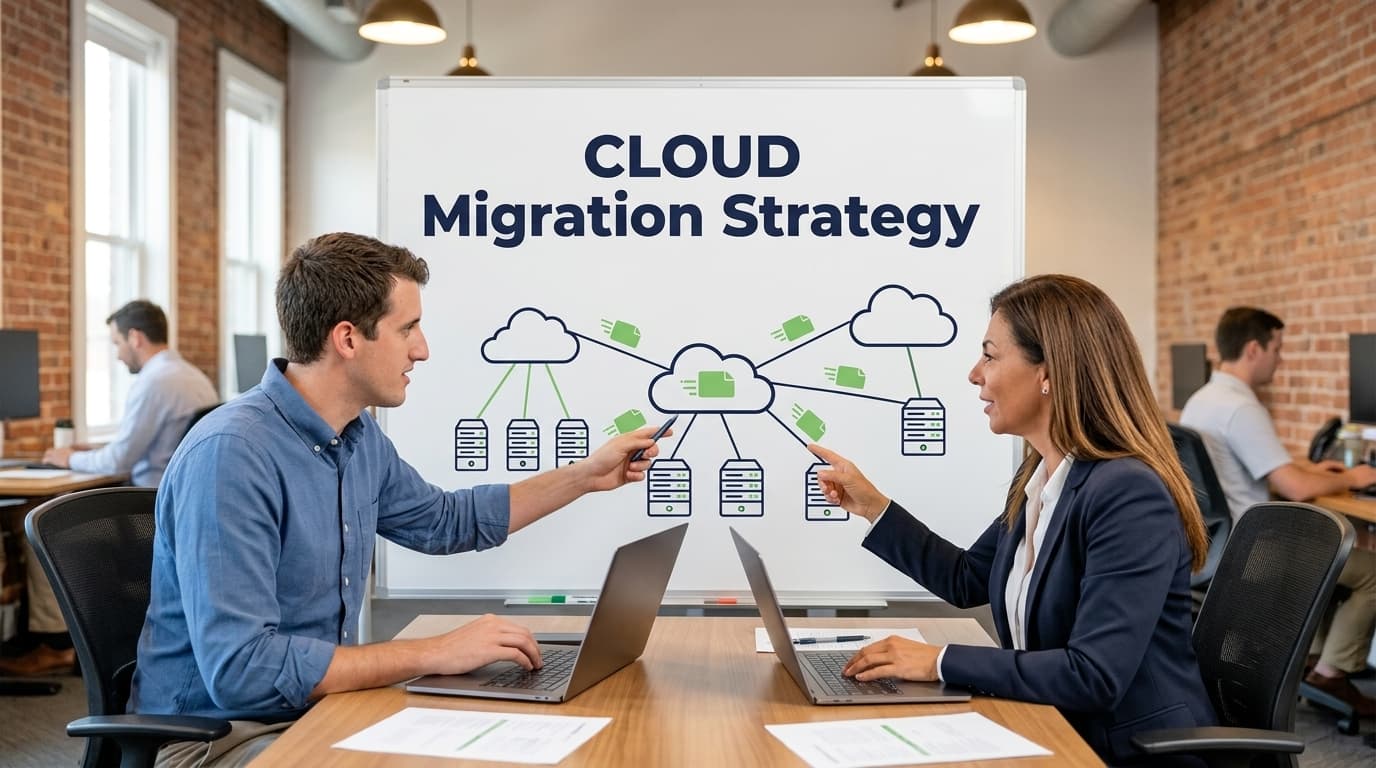
According to Gartner (2025), businesses that successfully execute a cloud-first strategy achieve a 25% increase in operational efficiency compared to those relying on legacy on-premise infrastructure. Cloud migration is the strategic process of moving an organisation's digital assets, applications, and data from local servers to a cloud-based environment. For many companies, this cloud migration strategy is the cornerstone of modern digital transformation services, enabling greater agility in an increasingly competitive global market.
The shift toward cloud-native environments is no longer a luxury but a necessity for scaling. According to IDC (2025), businesses investing in cloud infrastructure see a 20% improvement in time-to-market for new products and services. By embracing modern digital tools, SMEs can automate complex workflows and gain insights from data that was previously locked in disconnected, legacy silos.
For Portuguese SMEs, the transition involves careful navigation of local regulatory landscapes and technical requirements. While the initial investment might seem significant, the long-term ROI is profound. By standardising data storage and processing via the cloud, companies can ensure that every department remains synchronised, fostering a culture of agility that is critical for staying ahead in the European market.
Why should Portuguese SMEs prioritise cloud migration?
Cloud migration allows businesses to replace expensive, high-maintenance hardware with flexible, scalable solutions that adapt to real-time demand. By shifting to the cloud, SMEs can reduce capital expenditure and redirect resources toward innovation, ensuring they remain competitive while maintaining a robust support system for investment and operational expansion.
The role of managed service providers
Navigating the technical complexities of cloud adoption often requires specialised expertise that internal IT departments may lack. Bizin facilitates this transition by providing tailored support that bridges the gap between legacy infrastructure and modern cloud environments. Our team assists businesses in identifying the most efficient migration pathways, ensuring that security protocols are strictly aligned with both EU standards and unique company objectives. By leveraging Bizin as a partner, SMEs can minimise operational disruption, accelerate implementation timelines, and focus on their core business goals while we manage the intricate backend requirements of the cloud architecture.
The core benefits for your business
- Scalability: Instantly adjust computing power based on seasonal demand or business growth.
- Cost efficiency: Transition from heavy upfront hardware costs to a predictable, usage-based subscription model.
- Enhanced security: Leverage the advanced compliance and encryption protocols provided by major cloud service providers.
Cloud migration is not just an IT task; it is a fundamental business transformation.
How does cloud migration work for Portuguese SMEs and how can it be optimized?
Successful migration requires a phased approach that balances technical requirements with business goals. According to McKinsey (2024), 60% of companies that adopt a structured migration framework report significantly lower downtime during the transition phase. In 2025, a report by Bizin highlighted that 45% of local firms cite internal skill gaps as the primary barrier to migration, reinforcing the need for professional technical support. The process typically involves assessment, planning, execution, and ongoing optimization to ensure maximum ROI.
Key stages of the migration lifecycle
- Assessment: Audit your existing infrastructure to identify which applications are cloud-ready.
- Strategy selection: Choose between rehosting, refactoring, or re-platforming based on your specific needs.
- Execution: Migrate data in stages to minimize disruption to your IT managed services and daily operations.
- Optimization: Continuously monitor performance to refine costs and security settings.
Portuguese SMEs must also navigate strict data residency requirements. While major cloud providers offer global reach, many local entities are legally compelled or operationally required to keep sensitive data within the European Economic Area (EEA) to comply with GDPR. Balancing the flexibility of international cloud hosting with the necessity of local data residency requires a sophisticated architectural approach, often utilising specific regional zones or private cloud nodes located within Portuguese borders to ensure full regulatory alignment without sacrificing performance.
Ensuring long-term cloud scalability
Once the initial migration is complete, the focus must shift to continuous improvement. Utilizing modern APIs and automated monitoring tools allows businesses to scale resources dynamically. This ensures that your infrastructure grows in tandem with your customer base, rather than acting as a bottleneck to your future expansion.
Data-driven planning is the primary indicator of a successful cloud transition.
Overcoming common challenges in cloud adoption
Transitioning to the cloud often brings concerns regarding data sovereignty and legacy system compatibility. However, with the right partner, these challenges become manageable. As of 2026, many Portuguese SMEs are adopting hybrid cloud models to maintain regulatory compliance while enjoying the benefits of modern cloud-native tools.
Mitigating risks during the transition
- Compliance: Ensure your provider adheres to GDPR and local data protection regulations.
- Staff training: Invest in upskilling your team to manage new cloud-based workflows effectively.
- Vendor lock-in: Plan for multi-cloud or containerized strategies to maintain flexibility.
How can cloud migration improve long-term ROI?
Moving to the cloud fundamentally changes how businesses account for technology costs, enabling a shift from heavy CapEx (capital expenditure) to a more predictable OpEx (operational expenditure) model. This change frees up essential cash flow that can be redirected into innovation and growth. According to Forrester (2025), companies adopting cloud-native architectures see an average 30% reduction in total infrastructure management costs over three years. By eliminating the need for constant server hardware upgrades, energy-intensive cooling, and physical site security, businesses can align their IT spending precisely with their actual consumption, resulting in a leaner, more agile, and highly efficient financial structure for long-term scalability.
What is the strategic impact of cloud migration?
Strategic cloud adoption enables a competitive advantage by allowing SMEs to integrate AI and real-time analytics into their daily operations. By removing the burden of server maintenance, your team can pivot their focus toward value-added activities. In 2025, firms that successfully transitioned reported a 15% increase in cross-departmental collaboration, breaking down data silos that previously hindered strategic decision-making. According to Deloitte (2024), 78% of businesses using cloud-based AI analytics tools report faster response times to market shifts compared to traditional on-premise setups.
Frequently asked questions
What is the biggest risk during cloud migration? According to industry standards, the biggest risk during cloud migration is poor planning regarding data integrity and system dependencies. Without a thorough audit of existing applications, companies may face unexpected downtime or security gaps. A structured approach that prioritizes data backup and testing before the final cutover is essential for a seamless transition.
How long does a typical cloud migration take? Migration timelines vary based on the complexity of your current infrastructure and the volume of data. While small projects can be completed in weeks, large-scale enterprise migrations may take months. According to industry benchmarks in 2025, most SMEs complete their primary migration phase within a six-month window.
Is cloud storage secure for sensitive business data? Yes, cloud storage is often more secure than traditional on-premise servers. Leading cloud providers invest billions in security infrastructure, including advanced encryption, multi-factor authentication, and automated threat detection. When configured correctly, the cloud provides a higher level of protection against physical theft and hardware failure than local storage.
Does cloud migration reduce IT costs? Cloud migration shifts costs from capital expenditure (CapEx) to operating expenditure (OpEx). While monthly subscription fees exist, you eliminate the costs of hardware maintenance, cooling, electricity, and physical security. This allows SMEs to scale their IT spending in direct alignment with their actual business growth and usage requirements.
What is the difference between public and private cloud? Public cloud services are shared resources managed by third-party providers, offering high scalability and lower costs. Private clouds are dedicated environments for a single organization, offering maximum control and customization. Many Portuguese businesses now opt for a hybrid approach as of Q1 2025 to balance these benefits effectively.
Start your digital transformation journey
Embracing cloud technology is a vital step for any business looking to thrive in the modern economy. By moving away from legacy constraints, you position your organization to scale faster, secure your data more effectively, and focus on what truly matters: your customers.
If you are ready to explore how digital infrastructure can support your long-term goals, we are here to help. Reach out to our team to discuss how we can support your investment in technology and guide your business toward sustainable digital success.